
How Many Restrooms Does a County Fair Need?
Start with hourly attendance, not total attendance for the weekend. A fair drawing 2,000 people through the gate on a Saturday needs more units than the same 2,000 spread across three days. OSHA 1926.51(c) sets a construction-crew baseline of one toilet for every 20 workers, which is a useful floor for fair staff and vendors even though it was not written for a general public event. For the public side, most fair organizers in Wheaton lean on a rough ratio of one unit per 100 attendees at peak hour, then add units for food courts and beer tents where lines back up fast. Our guide to how many porta potties you need walks through the math in more detail if you want to run your own numbers before calling, and the OSHA portable toilet requirements page breaks down the worker-side ratios separately.
Every cluster of standard units needs an accessible one mixed in. ADA Standards section 213.2 requires at least 5 percent of clustered single-user units to be accessible, and never fewer than one. That means even a small fair with four units in a row needs one ADA accessible porta potty placed on the same firm, level pad as the rest. ADA Standards section 302.1 calls for stable, slip-resistant ground, which matters on fairground grass that gets soft after rain. If your event runs bigger than a single row of toilets, a portable restroom rental plan that blends standard units with a trailer option covers both budget and comfort needs.
What Restroom Options Work Best for Fair Crowds?
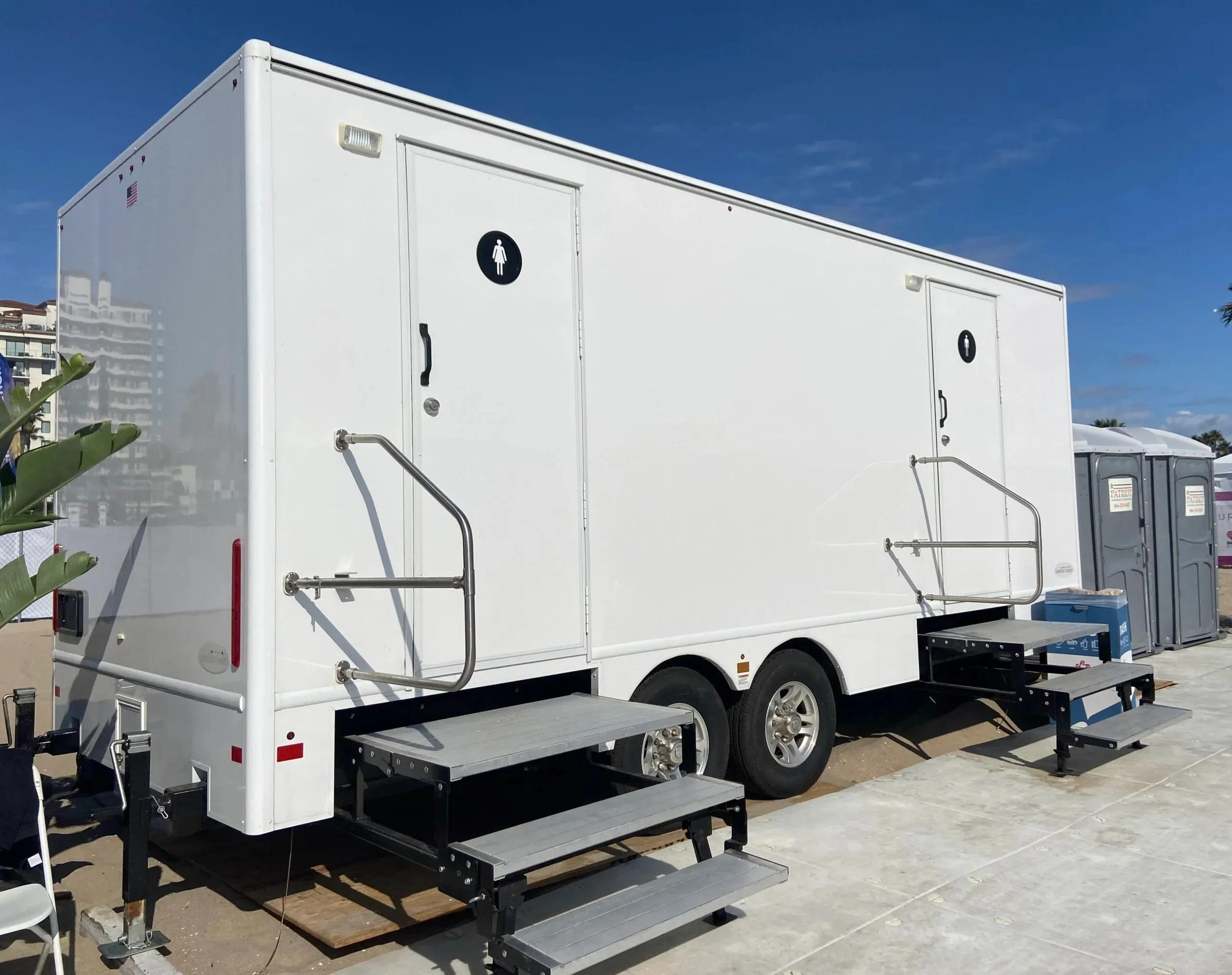
Standard units handle the bulk of foot traffic at the lowest cost per unit, and they hold their own even during long fair hours because each one carries a 60 to 70 gallon holding tank, a spec covered further on the portable toilet rental page. For grandstand areas, VIP sections, or a beer garden, a deluxe flushable porta potty gives fairgoers a flush handle and a nicer interior without the footprint of a full trailer. If your fair has a hospitality tent or a ticketed area, a restroom trailer rental is worth pricing out. Trailers built for events run $2,499 to $3,899 for the booking, which sounds steep next to a standard unit but makes sense when you're running multi-day hospitality for sponsors, and the restroom trailer rental cost page breaks that figure down further.
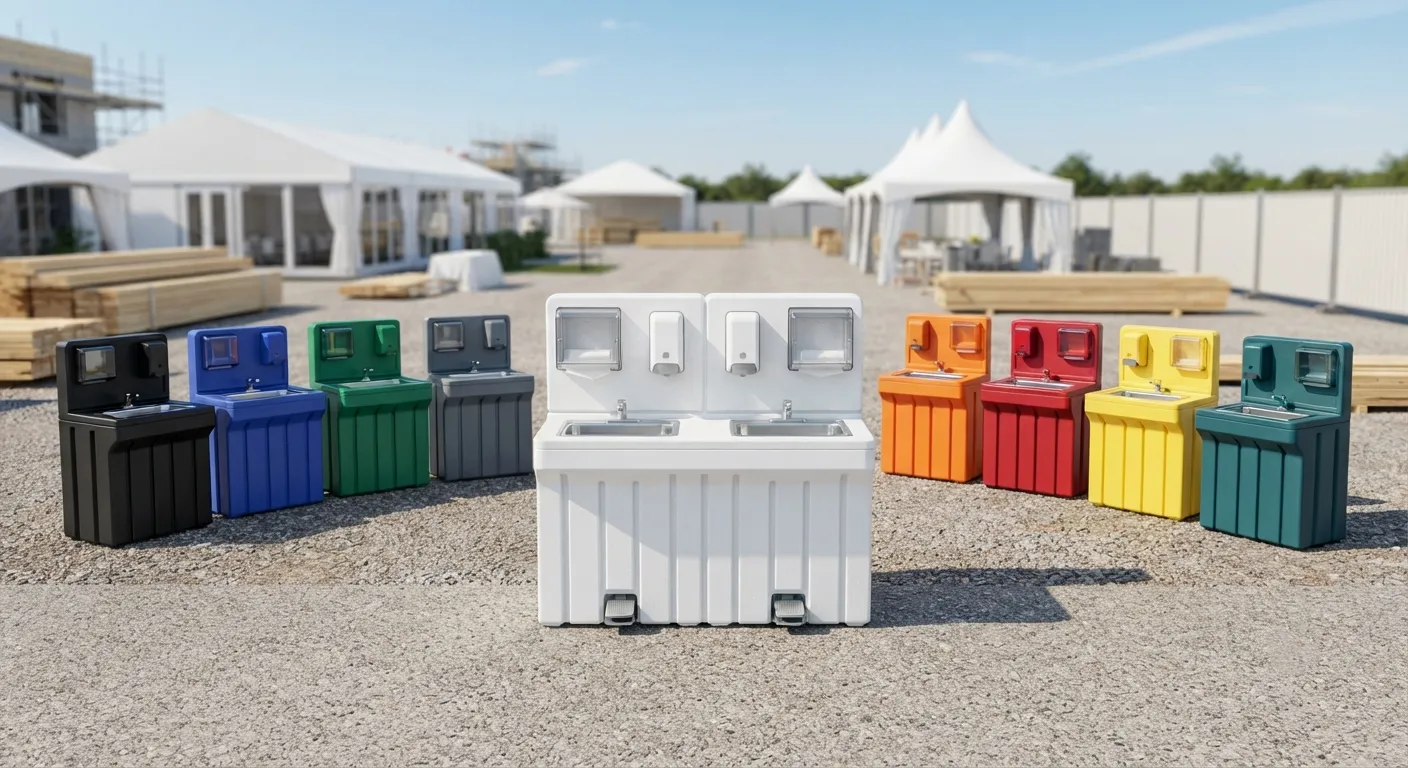
A 4-stall or 8-stall trailer setup can also solve queue length during dinner-hour rushes when everyone leaves the midway at once. Look at the 4 stall restroom trailer and 8 stall restroom trailer pages for stall counts against expected crowd size. Handwashing matters too, separate from the toilets themselves. Under 29 CFR 1910.141(d)(2), washing facilities need soap and towels or a hand-drying device, since hand sanitizer alone does not satisfy that standard. A run of handwashing station rental units near food vendors keeps that requirement covered and keeps lines at the food court moving, and the handwashing station requirements page spells out what qualifies. Fair boards weighing county fair layouts against other big public events sometimes compare notes with our festival restroom rental and concert restroom rental pages, since crowd math is similar even when the setting is different.
Where Should Restrooms Go on the Fairgrounds?
Placement decides how well your whole plan works, no matter how many units you rent. Keep a straight path of about 60 feet of clearance behind any delivery point large enough for a truck, especially if you're also bringing in a 10 yard dumpster rental for vendor trash. ADA Standards section 403.5.1 requires a minimum 36 inch clear width on the accessible route to each unit, so don't let food stands or fencing narrow the path after setup. Ground stability matters as much as distance: a standard unit measures about 44 by 48 inches on the ground and needs a level, firm spot, not loose gravel or a slope, as covered in our porta potty placement guide.
Spread clusters near the midway, the grandstand, and the livestock barns rather than one bank of units near the main gate. Wheaton fairgrounds layouts often call for temporary fence rental around livestock and equipment areas anyway, and it's worth coordinating restroom placement with that fencing plan so pedestrian flow doesn't cross barn traffic. If your fair runs into cleanup and demolition after the gates close, a roll-off dumpster rental sited near the same access road saves a second mobilization, and checking dumpster weight limits ahead of time avoids surprise overage fees. For questions on where units are allowed to sit relative to sidewalks or public right of way, placement in the public right of way needs confirming with the City of Wheaton directly, since we don't carry ordinance specifics on this page; our porta potty permit requirements page has general background while you check.
How far in advance should we book county fair restrooms?
Book as soon as your dates are locked, ideally months out for a multi-day fair, and our request a quote page is the fastest way to get a date held. Fair season overlaps with wedding and festival season across the area, and trailer inventory in particular books up fast for event-length windows.
Do you deliver to fairgrounds outside Wheaton?
Yes. We've handled deliveries to towns including Lombard, 6.0 miles east of Wheaton, and Carol Stream, 6.0 miles north, alongside fairgrounds inside city limits.
How often are units serviced during a multi-day fair?
Multi-day fairs typically get at least one service visit per unit per day, more for high-traffic clusters. That's tighter than the baseline weekly interval in ANSI/PSAI Z4.3, which assumes lighter everyday use.
Can we add handwashing stations without full restroom trailers?
Yes. Standalone portable sink rental units work well near food vendors and livestock barns, satisfying handwashing needs without the cost of a trailer.
What if we need emergency restrooms added mid-event?
Call us directly. Our emergency porta potty rental service can often add units same-day if a line grows past what your original count can handle.
Next step
Get a delivery date
Tell us the address, the dates and the headcount. We size the order and confirm the route.